

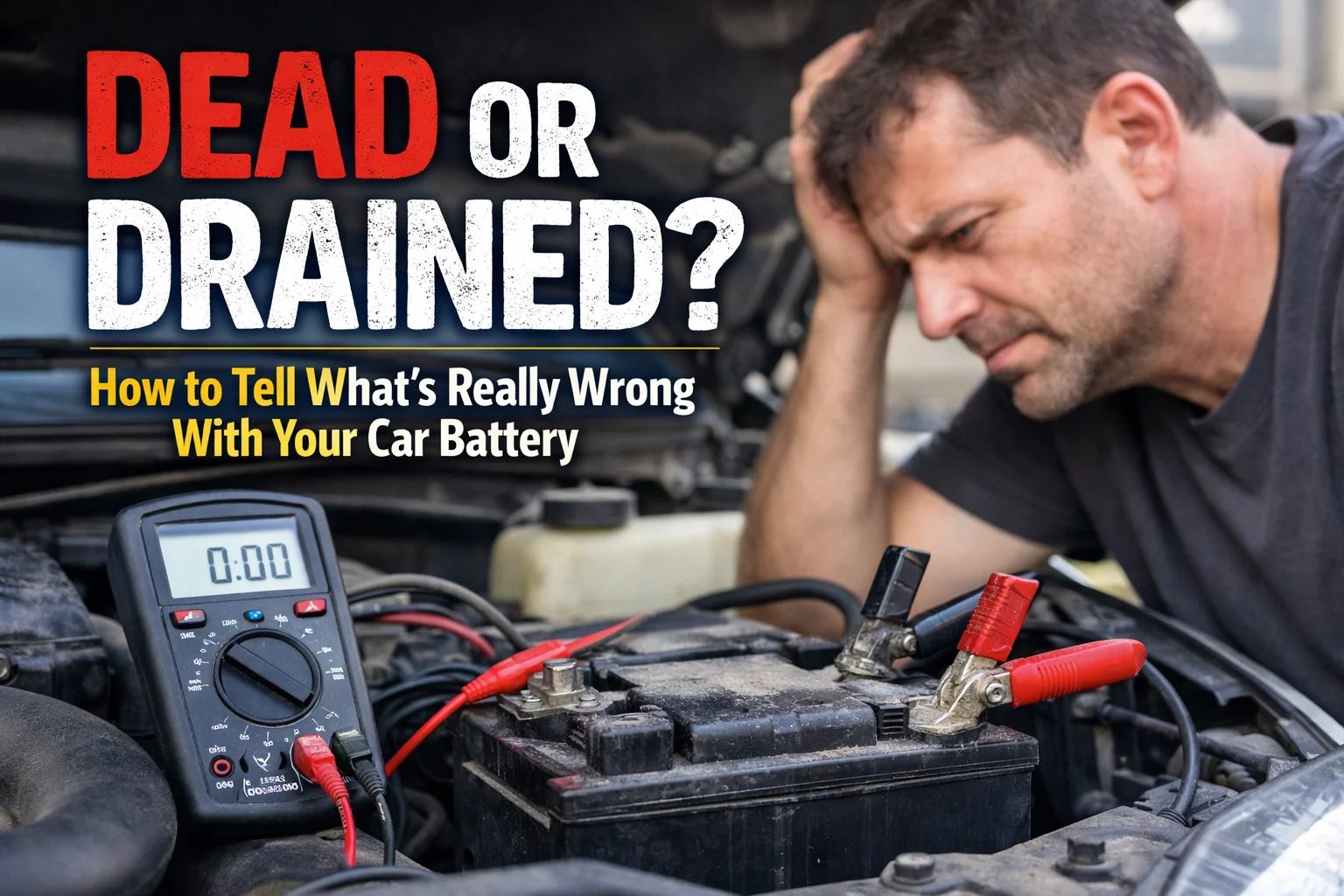
Nothing disrupts your day faster than a car that refuses to start. A weak click, dim lights, or total silence can leave you wondering whether your battery is dead or simply discharged. Many drivers assume the worst and replace the battery too soon. In reality, some issues are temporary and easy to fix. Understanding the signs helps you make the right decision quickly. In this article, we break down the key differences, warning signals, and practical steps to diagnose your battery issue before it leaves you stranded.
Understanding the Difference Between Dead and Discharged Batteries
A car battery does not fail instantly. It often shows warning signs before completely giving up. Knowing the difference between dead and discharged batteries helps avoid unnecessary replacements.
A discharged battery still has life left in it. It simply lacks enough power to start the engine. A dead battery, on the other hand, has lost its ability to hold a charge and must be replaced.
What Is a Discharged Battery?
A discharged battery usually happens due to temporary power drain.
- Leaving headlights or interior lights on
- Long periods without driving
- Cold weather reducing battery efficiency
What Defines a Dead Battery?
A dead battery is permanently damaged.
- Internal chemical breakdown
- Battery age exceeding three to five years
- Repeated deep discharges over time
Why This Difference Matters
Replacing a battery when it only needs recharging wastes money. Proper diagnosis ensures you fix the actual issue and avoid future breakdowns.
Common Signs Your Car Battery Is Discharged
A discharged battery usually gives you warning signs before complete failure. Paying attention early can help you recover quickly.
You may notice electrical components acting strangely before the engine struggles to start. These are often reversible issues.
Early Warning Symptoms
- Dim headlights when starting the car
- Slow engine crank
- Dashboard lights flickering
Situational Causes to Watch
- Short trips that do not allow recharging
- Extended parking periods
- Increased battery load during colder months, which makes seasonal battery care especially important
What to Do First
Jump-starting the car or charging the battery often solves the issue. If the car starts normally afterward, the battery is likely discharged rather than dead.
Clear Signs Your Car Battery Is Dead
A dead battery behaves very differently from a discharged one. These signs usually indicate replacement is unavoidable. If your car does not respond at all, the battery may have reached the end of its life.
Strong Indicators of Battery Failure
- No response when turning the key
- Burning smell or visible corrosion
- Battery warning light staying on
Age and Wear Factors
- Batteries older than five years
- Exposure to extreme heat
- Frequent jump-starts over time
Electrical System Clues
Sometimes battery failure triggers warning lights. When paired with symptoms like a persistent check engine light, electrical faults should never be ignored as they may indicate deeper issues beyond the battery itself.
How Driving Habits Affect Battery Health
Your daily driving patterns have a direct impact on battery performance and lifespan. Even careful drivers may unknowingly shorten their battery’s life through routine habits. Understanding these patterns helps prevent premature battery failure and unexpected breakdowns.
Driving Behaviors That Drain Batteries
Short trips or frequent stops prevent the battery from fully recharging, gradually weakening it over time. Other habits can also reduce battery efficiency.
- Frequent short-distance driving prevents full charging
- Long idle periods without engine use drain stored power
- Excessive accessory use while parked consumes battery energy
Environmental Factors
External conditions can also stress the battery, affecting its ability to hold a charge. Extreme temperatures and environmental debris can contribute to early failure.
- High heat accelerates fluid evaporation and reduces lifespan
- Cold weather slows chemical reactions inside the battery
- Dust and humidity increase corrosion on terminals
Preventive Driving Tips
Simple changes in driving habits can help extend battery life and maintain vehicle reliability.
- Take longer drives periodically to allow full recharging
- Turn off accessories like lights and infotainment before shutting down
- Schedule regular battery inspections to catch early issues
When Battery Problems Trigger Warning Lights
Battery issues can confuse drivers when dashboard warnings appear. Many mistake electrical warnings for engine trouble.nA weak battery can disrupt sensor readings and cause alerts to activate unnecessarily.
Common Battery Related Warnings
- Check engine light appearing intermittently
- Battery warning symbol on dashboard
- Power steering or ABS alerts
Is It Safe to Keep Driving?
Driving with warning lights can be risky. Understanding whether it is safe to drive with a check engine light depends on severity, but battery related warnings should always be inspected promptly.
Why Diagnosis Matters
Ignoring electrical warnings can lead to alternator damage or full vehicle shutdown. Early testing prevents expensive repairs.
Testing and Fixing the Problem Correctly
Proper battery diagnosis saves time, money, and frustration. Instead of guessing, testing helps determine whether the battery is dead or simply discharged. Accurate checks prevent unnecessary replacements and ensure the real issue is addressed quickly.
Simple At Home Checks
Basic observations can provide early clues about battery health.
- Turn headlights on and observe brightness levels
- Listen for clicking sounds or slow cranking during ignition
- Inspect battery terminals for corrosion or loose connections
Professional Testing Options
Advanced testing delivers precise results within minutes.
- Voltage testing using professional diagnostic tools
- Load testing under controlled conditions
- Alternator output inspection to confirm proper charging
Best Long Term Solution
If tests confirm battery failure, replacement is the safest option. For discharged batteries, proper recharging and improved driving habits help restore reliable performance.
Final Thoughts Before You Get Stuck
A dead battery and a discharged battery may feel the same at first, but the solution is very different. Recognizing the signs early helps you avoid unnecessary replacements and sudden breakdowns. Regular testing and smart driving habits go a long way in protecting your battery’s lifespan.
Need expert battery testing or quick assistance? Contact QuickAutoPro today and get back on the road with confidence.
FAQs
How long does a car battery usually last?
Most car batteries last between three and five years, depending on driving habits, climate conditions, maintenance quality, and how often the vehicle is used.
Can a dead battery be recharged?
A dead battery cannot reliably hold a charge. Once internal damage occurs, replacement is the safest and most dependable long-term solution.
Why does my battery keep discharging?
Repeated discharge may result from short trips, electrical drains, aging batteries, or charging system issues like a weak alternator or loose connections.
Can a weak battery trigger warning lights?
Yes, low battery voltage can disrupt sensors and electronic systems, causing dashboard warning lights to appear even when no major engine fault exists.
Should I replace my battery after one jump-start?
Not always. If the battery recharges properly and holds voltage afterward, replacement may not be needed, though testing is strongly recommended.