

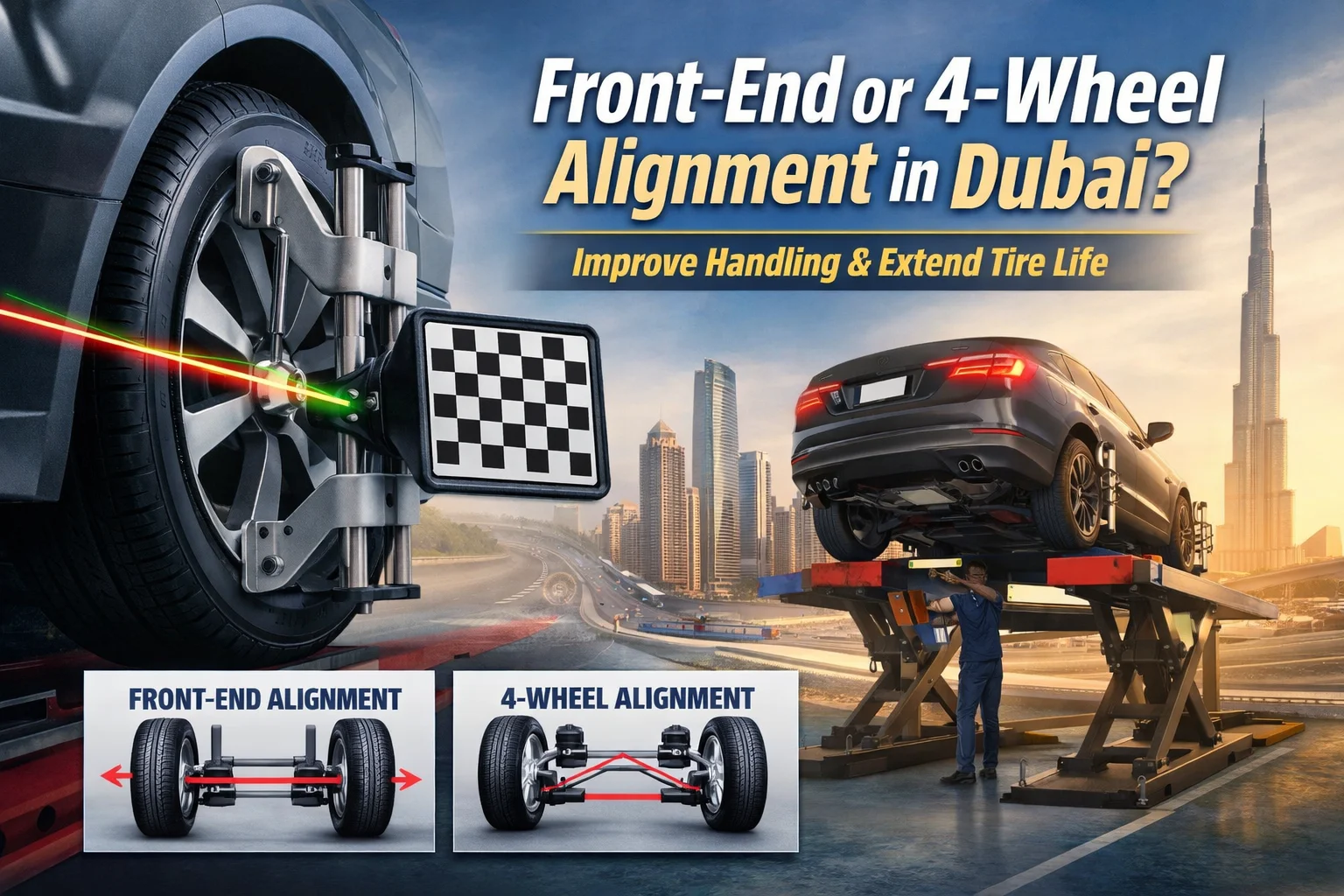
Dubai roads are smooth, but daily driving conditions still put stress on your vehicle. Heat, speed, curbs, and sudden braking can slowly push your wheels out of alignment. Many drivers ignore early signs until tire wear or steering issues become obvious. Front-end and 4-wheel alignment both correct these problems, but each serves a different purpose. Understanding when your car needs one can improve handling, reduce repair costs, and keep every drive comfortable. This guide explains the signs, causes, and benefits so you can make the right decision at the right time.
Understanding Front-End and 4-Wheel Alignment
Wheel alignment ensures that your tires meet the road at the correct angle. In Dubai’s fast-paced driving environment, even small misalignments can grow into expensive problems if ignored.
Front-end alignment focuses on the front wheels, while 4-wheel alignment adjusts all four wheels. The correct option depends on your vehicle type, suspension design, and driving symptoms.
What Front-End Alignment Corrects
- Adjusts the angles of the front wheels
- Improves steering response and straight-line tracking
- Reduces uneven wear on front tires
What 4-Wheel Alignment Covers
- Aligns all four wheels together
- Ensures proper rear wheel positioning
- Improves overall vehicle balance and stability
Why Alignment Type Matters
- Incorrect alignment choice leads to faster tire wear
- Handling issues may remain unresolved
- Fuel efficiency can suffer over time
Choosing the correct alignment method keeps your car stable, responsive, and easier to control on Dubai roads.
Dubai Driving Conditions That Affect Alignment
Dubai’s driving environment creates unique challenges for wheel alignment. Smooth highways may hide alignment issues, but urban driving quickly exposes them.
Daily factors like heat expansion, curb contact, and uneven road surfaces slowly push wheels out of position. Even parking at sharp angles can affect suspension geometry over time.
Common Local Causes of Misalignment
- Hitting curbs while parking in tight spaces
- Sudden braking in heavy traffic
- Speed bumps and uneven service roads
How Heat Impacts Alignment
- High temperatures affect tire pressure
- Rubber components soften under heat
- Suspension parts expand and contract
Urban Driving Risks
- Frequent turns strain steering components
- Road repairs create uneven surfaces
- Stop and go traffic increases suspension stress
These conditions explain why many Dubai drivers notice alignment problems sooner than expected, even with regular servicing.
Signs Your Car Needs a Front-End Alignment
Front-end alignment issues usually show up first through steering behavior. These signs often appear gradually, making them easy to ignore.
If your steering feels off or your car no longer tracks straight, front-end alignment may be needed. Early correction prevents damage to tires and steering parts.
Steering-Related Warning Signs
- Car pulls left or right on straight roads
- Steering wheel sits off-center
- Steering feels loose or unstable
Tire Wear Indicators
- Uneven wear on front tire edges
- Faster wear compared to rear tires
- Visible feathering patterns
Driving Comfort Changes
- Increased vibration at highway speeds
- Difficulty maintaining lane position
- Reduced control during turns
Ignoring these signs can place extra strain on braking systems and suspension components, which often work closely with steering alignment.
When a 4-Wheel Alignment Is the Better Choice
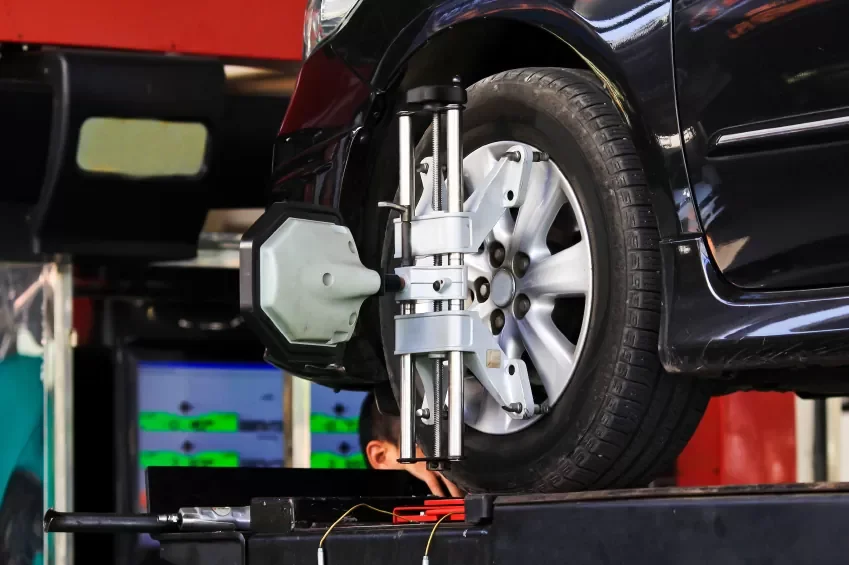
Modern vehicles often require 4-wheel alignment due to advanced suspension designs. Rear wheel angles play a critical role in overall stability and handling.
If rear wheels are misaligned, front adjustments alone will not solve the problem. Full alignment ensures the vehicle moves as a balanced unit.
Symptoms That Point to 4-Wheel Alignment
- Uneven wear on rear tires
- Car feels unstable during lane changes
- Steering corrections feel delayed
Vehicle Types That Need It Most
- SUVs and all-wheel-drive vehicles
- Cars with independent rear suspension
- Vehicles used for long highway drives
Performance Benefits
- Improved straight-line stability
- Better cornering control
- Balanced tire wear across all wheels
Proper alignment also supports tire performance, especially when combined with regular inspections and professional tire services that protect long-term road grip.
Cost, Safety, and Long-Term Benefits
Alignment is a small investment that delivers major long-term savings. Many drivers underestimate how much misalignment affects fuel use and component wear.
Misaligned wheels increase rolling resistance, which forces the engine to work harder. Over time, this leads to higher fuel costs and faster tire replacement.
Financial Advantages
- Extended tire lifespan
- Lower fuel consumption
- Reduced suspension repair costs
Safety Improvements
- Predictable steering response
- Shorter braking distances
- Improved control during emergency maneuvers
Preventive Maintenance Value
- Protects suspension and steering parts
- Reduces unexpected breakdowns
- Maintains consistent ride quality
Regular alignment checks also support overall vehicle safety, especially when paired with timely brake inspections that keep stopping power reliable.
How Often Dubai Drivers Should Check Alignment
There is no single rule for alignment intervals, but Dubai driving conditions often require more frequent checks.
Alignment should be inspected whenever handling changes or tires show uneven wear. Preventive checks save money and improve driving confidence.
Recommended Alignment Timing
- Every 6 to 12 months
- After hitting curbs or potholes
- When installing new tires
Daily Habits That Help
- Avoid sharp curb contact while parking
- Maintain correct tire pressure
- Drive smoothly over speed bumps
Professional Inspection Benefits
- Accurate angle measurements
- Early detection of suspension wear
- Precise adjustments using modern equipment
Routine alignment works best when combined with regular tyre service checks to ensure even wear and long-term driving comfort.
Align Your Drive With Confidence
Wheel alignment is not just a technical adjustment. It is a key factor in safety, comfort, and cost control for Dubai drivers. Whether your car needs a front-end correction or a full 4-wheel alignment, early action makes all the difference. Smooth handling, longer tire life, and confident driving start with proper alignment.
Book a professional alignment check today and enjoy safer, smoother drives across Dubai.
FAQs
How do I know if I need front-end or 4-wheel alignment?
Front-end alignment suits steering issues, while uneven rear tire wear often requires 4-wheel alignment. A professional inspection confirms the right option.
Can alignment issues affect fuel consumption?
Yes, misaligned wheels increase rolling resistance. This causes higher fuel usage over time.
Is wheel alignment necessary for new cars in Dubai?
Yes, road conditions and driving habits can affect new vehicles. Early checks ensure proper setup.
How long does a wheel alignment take?
Most alignments take 45 to 60 minutes. Time may vary based on vehicle condition.
Does alignment fix vibration problems?
Alignment improves stability, but vibration may also come from balancing or suspension issues. A full inspection helps identify the cause.