

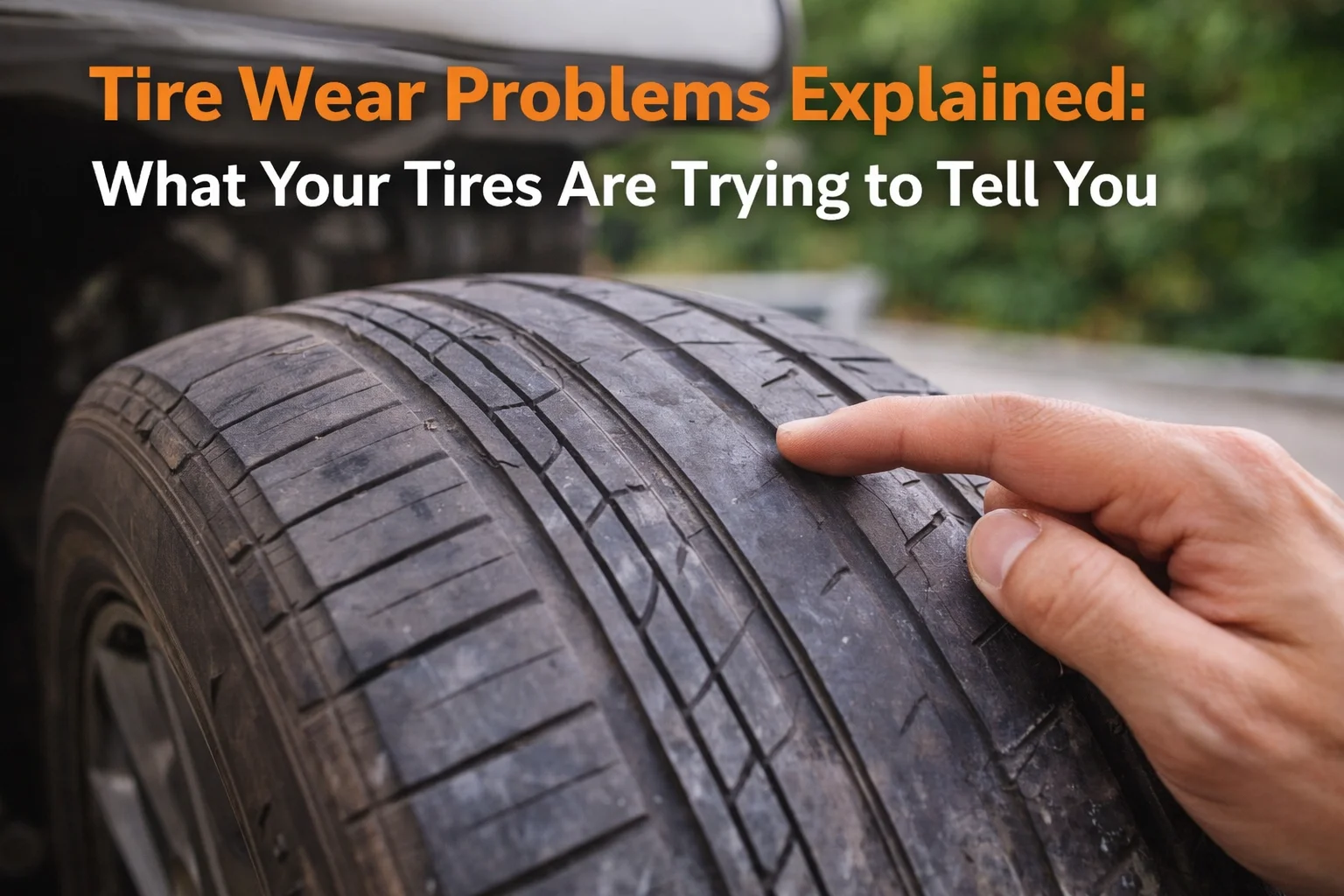
Tire wear problems often start small but grow into expensive and dangerous issues if ignored. Many drivers replace tires without understanding why they wore out in the first place. Uneven tread, rapid wear, or strange patterns usually point to deeper mechanical or maintenance problems. Knowing the causes and symptoms of tire wear helps you fix issues early, improve safety, and extend tire life. This guide breaks down the most common tire wear problems and explains what your tires are trying to tell you before bigger trouble begins.
Uneven Tire Wear and Its Hidden Causes
Uneven tire wear is one of the most common signs that something is wrong with your vehicle. When tires wear inconsistently, it often means alignment, suspension, or pressure issues are at play.
Two key factors usually work together to cause uneven wear. The first is improper wheel alignment, which changes how tires contact the road. The second is worn suspension components that allow excessive movement while driving.
Why Uneven Wear Happens
Misaligned wheels force certain tire areas to work harder than others. Over time, this creates bald spots, edge wear, or diagonal patterns. Suspension wear only accelerates the problem.
Common Causes to Watch
- Incorrect wheel alignment angles
- Worn shocks, struts, or bushings
- Driving frequently on rough or uneven roads
Why Early Detection Matters
- Prevents premature tire replacement
- Improves steering stability and control
- Reduces stress on suspension components
Drivers who notice uneven wear often benefit from professional inspection combined with regular tyre servicing to restore balance and extend tire life.
Rapid Tire Wear and Driving Habits
Rapid tire wear is not always caused by mechanical problems. In many cases, daily driving habits play a major role in how fast tires deteriorate.
Aggressive acceleration, sudden braking, and sharp cornering place constant stress on tire tread. Over time, this friction reduces grip and shortens tire lifespan significantly.
How Driving Style Impacts Tires
Hard driving increases heat buildup within tires. Excess heat weakens rubber compounds, leading to faster wear and reduced performance.
Habits That Accelerate Tire Damage
- Sudden braking at high speeds
- Aggressive cornering on city roads
- Overloading the vehicle beyond limits
Smarter Driving Benefits
- Longer tire lifespan
- Improved fuel efficiency
- Better control during emergency situations
When combined with alignment issues, aggressive driving can double the speed of tire wear. Understanding alignment differences such as front-end versus four-wheel setups helps drivers choose the right adjustment for their vehicle and driving needs.
Tire Pressure Problems and Wear Patterns
Incorrect tire pressure is one of the most overlooked causes of tire wear problems. Even small pressure differences can create noticeable tread damage over time.
Underinflated tires wear faster on the outer edges, while overinflated tires wear down the center tread. Both conditions reduce traction and increase safety risks.
Why Tire Pressure Matters
Proper pressure ensures even road contact, balanced load distribution, and optimal grip. Incorrect pressure forces tires to compensate unnaturally.
Signs of Pressure-Related Wear
- Edge wear on both sides of the tire
- Center tread wearing faster than edges
- Increased road noise or vibration
How to Prevent Pressure Damage
- Check tire pressure monthly
- Adjust pressure based on load and driving conditions
- Inspect tires before long trips
Consistent pressure management works best when paired with proper wheel alignment to ensure tires roll smoothly and evenly across all road surfaces.
Alignment Issues and Tread Damage
Wheel alignment problems are a major contributor to tire wear patterns that drivers often misinterpret. Slight misalignment can silently damage tires long before handling issues appear.
Alignment affects camber, toe, and caster angles. When these angles fall outside recommended limits, tires scrub against the road instead of rolling freely.
How Misalignment Affects Tires
Even small alignment errors increase friction. This leads to feathered edges, diagonal wear, and rapid tread loss.
Common Alignment Symptoms
- Vehicle pulling to one side
- Steering wheel not centered
- Uneven tread depth across tires
Why Alignment Should Not Be Delayed
- Extends tire lifespan
- Improves vehicle stability
- Reduces strain on steering parts
Understanding why wheel alignments matter helps drivers take timely action before tire damage becomes permanent and costly.
Suspension Wear and Tire Damage
Your suspension system directly affects how tires maintain contact with the road. When suspension components wear out, tires lose consistent pressure and alignment during driving.
Worn shocks and struts allow excessive bouncing, which causes tires to hit the road unevenly. This results in cupping or scalloped tread patterns.
How Suspension Issues Show Up on Tires
Tires reflect suspension problems faster than most drivers realize. Irregular wear patterns often appear before ride comfort declines.
Signs of Suspension-Related Tire Wear
- Cupped or wavy tread patterns
- Excessive bouncing after bumps
- Reduced braking stability
Why Suspension Health Matters
- Maintains even tire contact
- Improves braking performance
- Enhances overall driving comfort
Ignoring suspension wear often leads to repeated tire replacements without solving the root problem.
Preventing Tire Wear with Smart Maintenance
Preventing tire wear problems is easier and more affordable than fixing them later. A proactive maintenance approach protects both tires and vehicle components.
Routine inspections help identify early warning signs before damage becomes severe. Small adjustments make a big difference over time.
Simple Preventive Practices
Consistency is the key to keeping tires healthy. Maintenance does not require complex steps.
Smart Tire Care Tips
- Rotate tires regularly
- Maintain recommended tire pressure
- Inspect tread depth monthly
Professional Maintenance Benefits
- Early detection of alignment issues
- Balanced tire wear across all wheels
- Improved fuel efficiency and safety
Preventive maintenance keeps tires performing as intended and reduces long-term ownership costs significantly.
Final Thoughts from the Road
Tire wear problems rarely appear without reason. Every wear pattern tells a story about alignment, pressure, suspension, or driving habits. Understanding these signs helps you act early and avoid unnecessary expenses. Healthy tires mean safer handling, better fuel efficiency, and a smoother driving experience.
If your tires are showing unusual wear, now is the right time to act. Schedule a professional inspection and keep your vehicle performing at its best with confidence and control.
FAQs
What causes uneven tire wear?
Uneven wear is usually caused by alignment issues, suspension problems, or incorrect tire pressure. Early inspection helps prevent permanent damage.
How can I tell if my tires are wearing too fast?
Rapid tread loss, reduced grip, or visible bald spots indicate accelerated wear. These signs should not be ignored.
Does wheel alignment really affect tire life?
Yes, improper alignment causes tires to scrub against the road. This leads to faster and uneven wear.
Can tire pressure alone damage tires?
Yes, both overinflation and underinflation create uneven wear patterns. Regular pressure checks are essential.
How often should tires be inspected?
Tires should be inspected monthly and before long trips. Professional checks during routine service add extra protection.